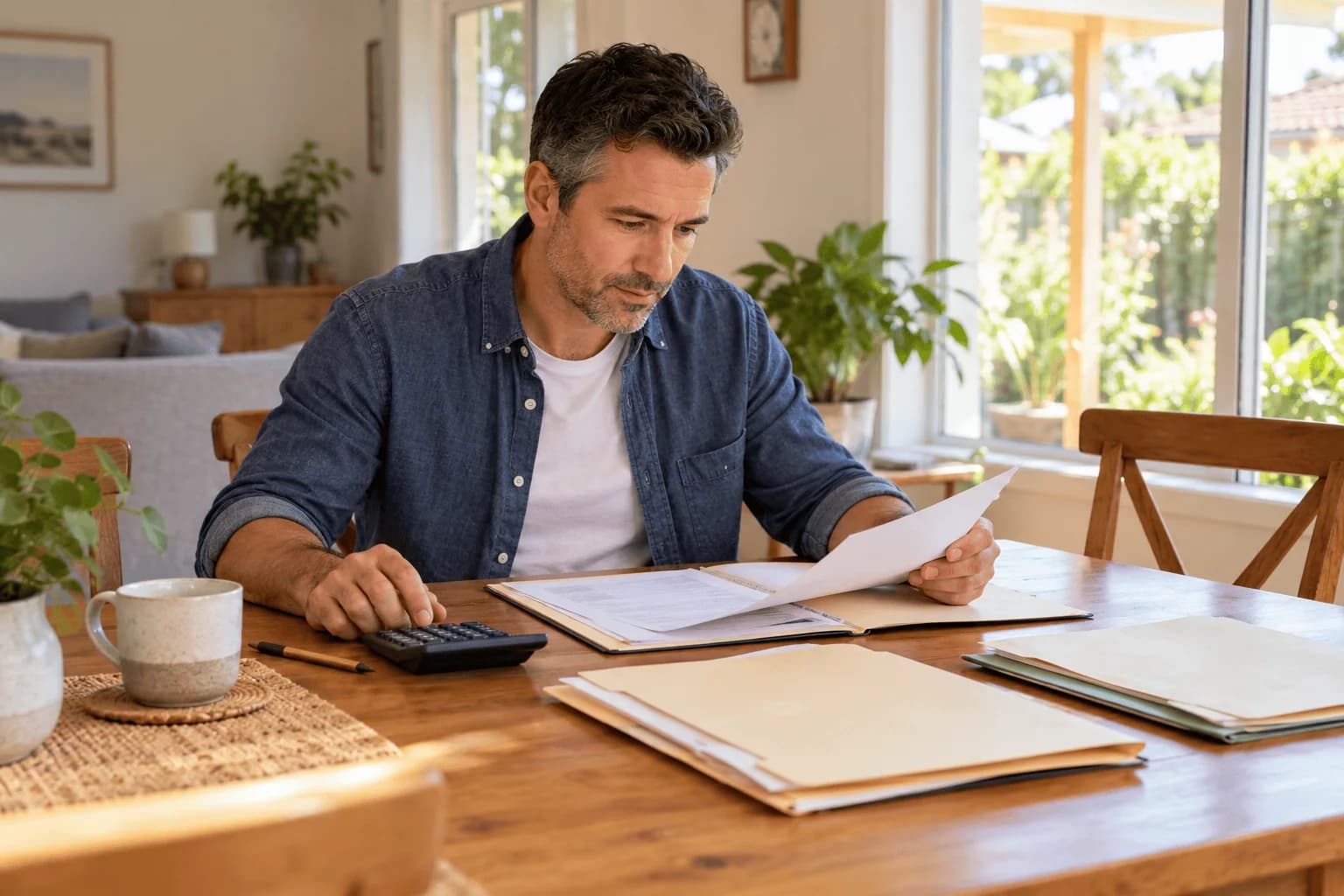


Around $600. On a purchase the size of a home, the building and pest report is the smallest bill you'll pay, and the only one that can hand the money straight back. A building inspection before buying a house in Australia isn't a formality for nervous buyers. It's negotiating leverage, and right now it's the cheapest leverage in the market.
The timing helps you. The RBA lifted the cash rate in February, March and May 2026, then held at 4.35% in June, with the next decision due Tuesday 11 August 2026. Higher rates thin out the buyer crowd, and a thinner crowd means vendors listen when you come back waving a defect report. Meanwhile Cotality's June 2026 data has Brisbane up 17.4% year on year with a median of $1.12M, so in the fast cities the dollars at stake per defect have never been bigger.
What does a building and pest inspection actually check?
Two reports, usually one visit. The building inspection covers the structure: roof, subfloor, walls, moisture, cracking and safety hazards, reported against Australian Standard AS 4349.1. The pest inspection hunts timber pests, chiefly termites, and flags both active infestations and the scars of old ones.
That second report earns its keep on its own. Home insurance policies in Australia generally exclude termite damage. The inspection is the only screen you get, and repair bills for eaten roof timbers routinely run into five figures.
Know the limits before you rely on it, though. Inspections are visual and non-invasive, which means a defined list of things they will and won't tell you:
| Covered | Not covered |
|---|---|
| Roof exterior, roof space and subfloor | Inside wall cavities |
| Structural cracking and movement | Whether plumbing and wiring actually work |
| Moisture readings in wet areas | Appliances, air-con, hot water performance |
| Active termites and past termite damage | Asbestos testing (visual note only) |
| Safety hazards (decks, balustrades, steps) | Strata records for units (separate strata report) |
Expect roughly $400 to $800 combined in most capitals at the time of writing, and use a licensed operator; in Queensland that means QBCC-licensed. For an apartment, a strata report matters more than a subfloor crawl, so ask which one your target property actually needs.
When should you book a building inspection before buying?
The answer depends entirely on how you're buying, which is why this decision connects to your contract, not your calendar.
Buying by private treaty? Make the offer subject to a building and pest condition, or use the cooling-off window to get the report done after signing. Both routes work. The condition route is cleaner, and your conveyancer words it so an unsatisfactory report lets you renegotiate or exit; that wording is precisely the job described in what a conveyancer does. Cooling-off periods differ by state, from days to none at all in some situations, so check the state-by-state cooling-off rules before you assume you have an escape hatch.
Auctions are the hard case. The hammer falls and you're unconditional. No cooling-off, no subject-to clauses, no refund on regret. Every inspection has to happen before auction day, which means you may pay for reports on homes you don't win. Budget for two or three. It stings. It is still cheaper than owning someone else's termite problem, and the trade-offs are covered in auction vs private treaty.
The bank's valuation is not an inspection
Buyers regularly assume the lender checked the house. It didn't. The valuation protects the lender's security position, not your roof, and plenty of valuations are desktop or kerbside jobs; we've seen approvals go through without a valuer ever stepping past the letterbox.
Follow that through. If the valuation won't catch the rotten bearers, and insurance won't cover the termites, the $600 report is the only professional eyes your side of the deal gets. Skipping it doesn't make you decisive. It makes you the only party at the table without information.
Georgia and Josh: the $600 report that took $14,000 off the price
Georgia and Josh are first home buyers circling a $760,000 townhouse in Keperra, in Brisbane's north-west. Same couple, two paths.
Path A: skip the report. They save $600 and settle on schedule. Eighteen months later a renovation quote uncovers old termite damage in the garage roof timbers and a failed shower membrane. Combined repair quote: $18,000. Insurance declines the termite portion. The $600 saving now costs 30 times itself.
Path B: book the report. The inspector finds the same two defects before contract. Armed with a builder's quote of $16,000, they go back to the agent. In a market where the next bidder isn't queued at the door, the vendor agrees to $14,000 off. After the $600 fee, they bank $13,400 towards repairs done on their terms, with nothing left to surprise them.
The gap: Path A pays $18,000 for surprises. Path B pays $2,600 all-in for known repairs. Call it a $15,000 turn on one Tuesday-morning inspection.
Based on typical scenarios. Individual outcomes vary.
What should you do with a bad report?
A bad report is rarely a dead deal. You have three moves: renegotiate the price against a builder's quote, ask the vendor to fix the defect before settlement and verify it at the final walk-through covered in settlement day explained, or walk away under your condition or cooling-off rights.
Walking is only a real option when you know your finance survives the next property too. The Wity Borrowing Power Assessment models your capacity across 45+ lenders rather than one bank's calculator, so you know your ceiling holds before you let a purchase go. Pair it with the rest of your first home buyer prep for 2026, and the report becomes what it should be: leverage, not a scare. Our first home buyer service runs the finance side while the inspector runs the tape and torch.
Want to see your numbers before you spend a cent on inspections? Start the Wity questionnaire → Free, no credit check, two minutes.